


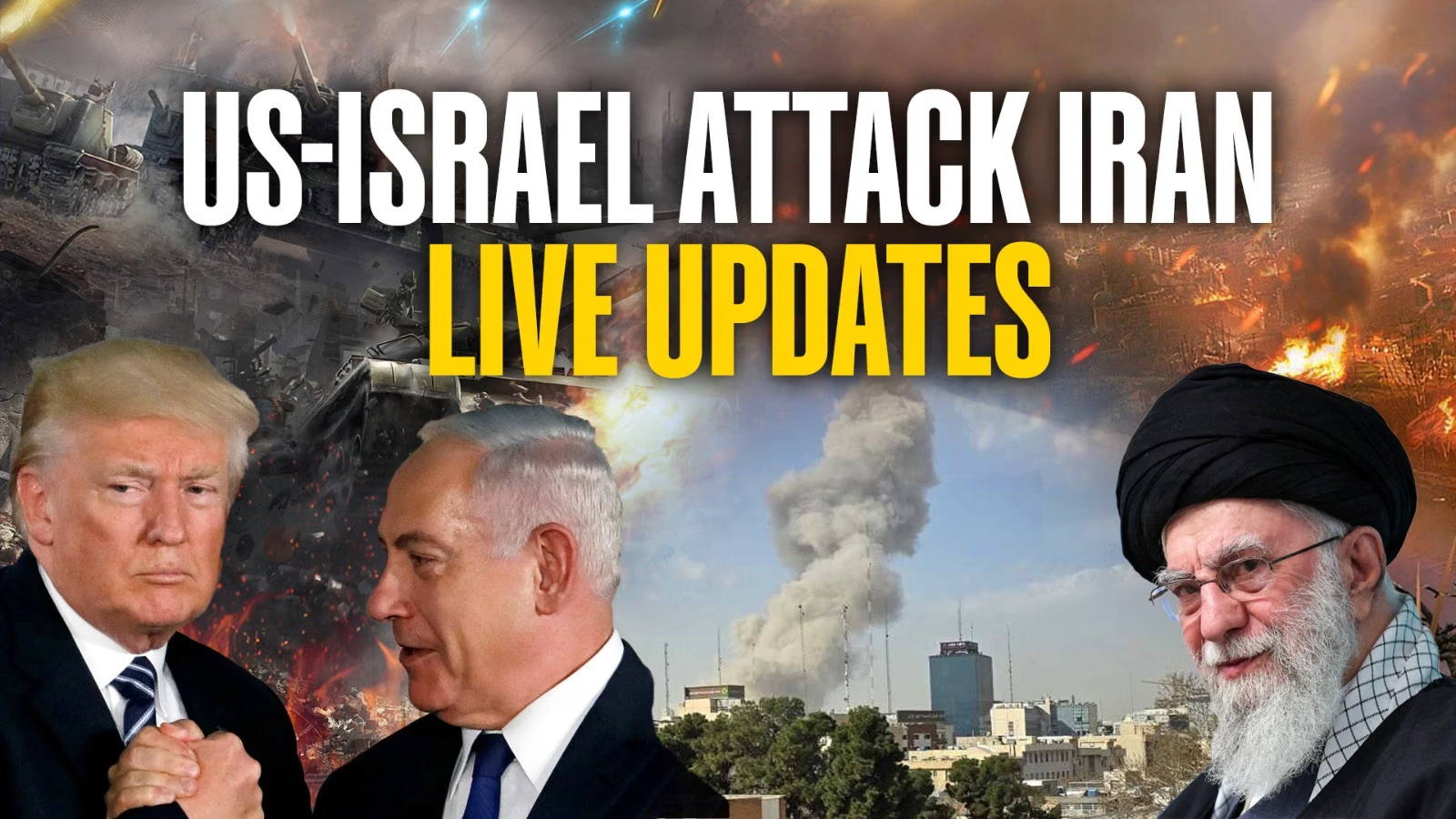
 In a dramatic escalation that has shaken the Middle East and alarmed the international community, reports indicate that the United States and Israel have launched a large-scale joint military offensive against Iran. The operation, described by officials and analysts as one of the most intense attacks in the region in recent years, reportedly involved more than 1,200 munitions dropped within 24 hours on multiple strategic targets across Iran.
The strikes, which began on February 28, 2026, targeted Iranian military installations, missile bases, and nuclear-related facilities in cities including Tehran, Isfahan, and other strategic locations. According to emerging reports and statements from various governments and media organizations, the attacks may have resulted in the death of Iran’s Supreme Leader Ali Khamenei, marking a historic and highly controversial turning point in Middle Eastern geopolitics.
This unfolding conflict has triggered retaliatory missile strikes by Iran, heightened tensions across the Persian Gulf, and fears of a wider regional war.
The Beginning of a Massive Military Operation
The coordinated operation between the United States and Israel reportedly involved advanced aircraft, cruise missiles, and intelligence-driven strikes designed to weaken Iran’s military infrastructure and leadership network. The campaign was launched after intelligence concerns over Iran’s nuclear program and missile capabilities, which Washington and Tel Aviv described as a major security threat.
Officials from the Israeli Air Force said that in just one day of intense bombardment, more than 1,200 bombs and missiles were dropped on Iranian targets. The strikes hit command centers, weapons depots, and other strategic locations across the country.
Witnesses in Tehran and other cities reported loud explosions, widespread panic, and significant infrastructure damage. Several international airlines temporarily halted flights in the region, while governments around the world issued travel advisories for the Middle East.
Military analysts say the scale of the attack suggests long-term planning and coordination between Washington and Tel Aviv. Some experts believe the operation was intended not only to weaken Iran’s military power but also to disrupt its leadership and strategic command.
Reports of Ali Khamenei’s Death
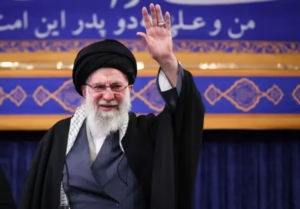
One of the most shocking developments in the conflict is the reported death of Ali Khamenei, Iran’s Supreme Leader for more than three decades. According to Iranian state media and multiple international reports, Khamenei was killed when airstrikes hit a secure compound linked to him during the opening phase of the attacks.
His death, if fully confirmed, represents one of the most significant targeted killings of a world leader in modern history. Reports suggest that intelligence agencies had tracked the location of several high-ranking Iranian officials before the strike, which led to the destruction of the compound in Tehran where Khamenei was believed to be located.
News reports also indicate that several senior Iranian officials and military leaders were killed during the operation, creating a major leadership crisis inside the country.
Following the announcement, Iran declared a period of national mourning and began making arrangements for new leadership at the highest level of government.
The killing of Khamenei has drastically changed the dynamics of the conflict. Analysts say it could reshape Iran’s internal politics, potentially strengthening hardline factions within the country.
Iran’s Immediate Retaliation
Within hours of the strikes, Iran launched retaliatory attacks against Israel and U.S. military bases in the region. Missiles and drones were reportedly fired toward several locations in the Middle East, including targets in Israel and U.S. facilities in Gulf countries.
Air defense systems in multiple countries were activated as incoming missiles were intercepted. Sirens sounded in several Israeli cities, while reports emerged of explosions and damage across parts of the region.
Iranian officials vowed revenge and warned that the attacks marked the beginning of a prolonged confrontation. According to statements reported by international media, Iranian leaders said the country would continue responding until the “enemy is defeated.”
The Iranian government has also threatened further strikes on U.S. bases and allied forces in the Middle East if the attacks continue.
 Warning from the Iranian President
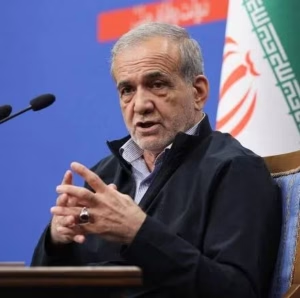
Amid the escalating crisis, Iranian leaders issued strong warnings to both the United States and Israel. The Iranian president and top officials declared that the country would defend its sovereignty and respond with what they described as “powerful and sustained retaliation.”
Officials emphasized that Iran’s military capabilities remain intact despite the strikes and warned that any further attacks could lead to a much larger regional war.
In speeches broadcast on Iranian media, government representatives said the country’s armed forces were ready for a long confrontation and that the attacks would not break Iran’s resistance.
Such statements have raised fears that the conflict could spread beyond Iran and Israel, potentially involving other countries in the region.
Civilian Casualties and Humanitarian Concerns
The large-scale airstrikes have also led to significant humanitarian concerns. Reports suggest that hundreds of people were killed or injured during the attacks, including civilians. Some strikes reportedly hit residential areas and public buildings.
One of the most tragic incidents involved a missile strike on a girls’ school in the southern Iranian city of Minab, where dozens of people were reported killed and many others injured.
Images circulating on social media and international news outlets show damaged buildings, rescue teams searching through rubble, and families mourning victims. Human rights organizations have called for an independent investigation into civilian casualties.
The situation has sparked global concern about the humanitarian impact of the conflict and the potential for further loss of life if the war intensifies.
International Reaction
The international community has reacted with alarm to the sudden escalation. The United Nations called for urgent de-escalation and warned that the conflict could destabilize the entire Middle East. Several world leaders urged both sides to avoid further military action and return to diplomacy.
Countries across Europe, Asia, and the Gulf region have begun emergency diplomatic consultations. Oil markets have also been affected, with concerns about disruptions to shipping routes such as the Strait of Hormuz, a vital channel for global energy supplies.
Security experts warn that if the conflict continues, it could trigger a chain reaction involving regional allies and proxy groups, potentially expanding into a much larger war.
Rising Tensions Before the Attack
Tensions between Iran, Israel, and the United States had been building for years. Disputes over Iran’s nuclear program, missile development, and regional influence have frequently led to confrontations and proxy conflicts.
In the months leading up to the latest strikes, intelligence reports suggested that Iran’s uranium enrichment had reached levels close to weaponization, raising alarm in Washington and Tel Aviv.
Negotiations between Iran and the United States had been underway earlier in 2026, but progress was limited. Israel, in particular, argued that military action might be necessary to prevent Iran from developing nuclear weapons.
These tensions ultimately culminated in the large-scale offensive now unfolding.
A Region on the Edge
The reported death of Iran’s top leader and the massive scale of the bombing campaign have pushed the Middle East to what analysts describe as a “dangerous turning point.”
Military experts say the conflict could reshape alliances, shift power dynamics, and have long-lasting consequences for global security. If retaliatory attacks continue, there is a possibility that more countries may become involved, either directly or indirectly.
Meanwhile, civilians across the region remain uncertain about what comes next.